
Infusion Therapy for Inflammatory Bowel Disease
What is Infusion Therapy for Inflammatory Bowel Disease?
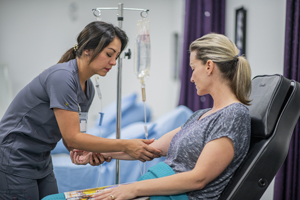
Infusion therapy for inflammatory bowel disease (IBD), such as Crohn’s disease and ulcerative colitis, is a treatment where medications are delivered directly into your bloodstream through an intravenous line (IV). Medications that an individual may receive through infusion include biologics and immunosuppressants. It is used to control inflammation, prevent flare-ups, and promote healing of the intestinal lining.
What are the Common Medications Used in Infusion Therapy for Inflammatory Bowel Disease?
Common medications used in infusion therapy for IBD include:
- Infliximab (Remicade®)
- A biologic that blocks TNF-alpha, a key protein involved in inflammation.
- Used for moderate to severe Crohn's and ulcerative colitis.
- Vedolizumab (Entyvio®)
- Targets gut-specific inflammation without broadly suppressing the immune system.
- Ustekinumab (Stelara®)
- Blocks IL-12 and IL-23, two proteins that drive inflammation.
- Often used if anti-TNF therapies aren't working.
- Natalizumab (Tysabri®)
- Less commonly used now, but an option for severe Crohn’s disease.
Indications for Infusion Therapy for Inflammatory Bowel Disease
Infusion therapy for inflammatory bowel disease is typically recommended in the following scenarios:
- It can deliver stronger, faster-acting medication compared to oral drugs.
- It helps patients who have not responded well to pills (like mesalamine) or steroids.
- It targets specific parts of the immune system, reducing side effects compared to general immunosuppressants.
Procedure for Infusion Therapy for Inflammatory Bowel Disease
Infusion therapy for inflammatory bowel disease is typically done at an infusion center, hospital, or specialized clinic. It typically uses biologic drugs like infliximab (Remicade®) or vedolizumab (Entyvio®) that target specific parts of the immune system. Sessions can last 1–3 hours depending on the drug. In general, the procedure involves the following steps:
- A nurse inserts a small catheter (IV line) into a vein in your arm or hand.
- The IV is connected to tubing that will deliver the medication.
- The prescribed biologic medication is started through IV.
- The infusion rate is carefully controlled, often beginning slowly and increasing gradually.
- The medication drips in slowly over 30 minutes to a few hours, depending on the drug.
- You usually need regular treatments - every 4 to 8 weeks for many biologics - to keep symptoms controlled.
Post-Procedure Care
After infusion therapy for IBD, patients are typically monitored for about 30 to 60 minutes to ensure there are no immediate side effects, such as allergic reactions, fever, or difficulty breathing. Once cleared, most people can resume their normal activities, although some may feel mildly tired for the rest of the day. Patients are advised to watch for any delayed symptoms, such as rash, joint pain, signs of infection, or persistent fatigue, and to contact their healthcare provider if they occur. Follow-up appointments are scheduled to assess how well the therapy is controlling the IBD and to plan the next infusion, which usually occurs every few weeks depending on the medication. Regular blood work and symptom tracking help ensure the treatment remains safe and effective over time.
Side Effects
Possible side effects of infusion therapy for IBD include:
- Headache
- Nausea
- Fever
- Fatigue
- Skin rash or itching at the IV site
- Allergic reaction
- Increased risk of infections (because the immune system is weakened)
Benefits
The benefits of infusion therapy for IBD include:
- Rapid symptom control (quickly reduces inflammation)
- Helps heal the intestinal lining
- Decreases hospitalizations and surgeries
- Targeted treatment
- Maintenance of remission
- High effectiveness
- Improved quality of life
Patient Services and Care Coordination
Our team can assist with appointments and general inquiries.