
Endoscopic Treatment for Achalasia
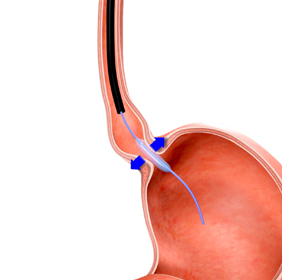
What is Endoscopic Treatment of Achalasia?
Endoscopic treatment of achalasia is a minimally invasive procedure used to treat achalasia.
Achalasia is a rare swallowing disorder that affects the esophagus, the tube connecting the throat to the stomach. In this condition, the muscles of the esophagus fail to contract normally, making it difficult to push food toward the stomach. Additionally, the lower esophageal sphincter (LES), a muscular valve at the bottom of the esophagus, does not relax properly, preventing food from passing into the stomach.
What are the Common Endoscopic Treatments for Achalasia?
Common endoscopic treatments for achalasia include the following:
- Pneumatic Balloon Dilation: A balloon is inserted and inflated at the lower esophageal sphincter to stretch and weaken the tight muscle, helping food pass more easily into the stomach.
- Peroral Endoscopic Myotomy (POEM): A newer advanced technique in which the inner muscle fibers of the lower esophageal sphincter are cut through the endoscope to relieve obstruction and improve swallowing.
- Botulinum Toxin (Botox) Injection: Botox is injected into the lower esophageal sphincter to temporarily relax the muscle. This is often used for patients who may not be suitable for surgery.
When is Endoscopic Treatment for Achalasia Recommended?
Endoscopic treatment for achalasia is recommended when a person experiences significant symptoms such as difficulty swallowing, regurgitation of food, chest pain, coughing, or unintended weight loss due to impaired movement of food into the stomach.
It may be advised:
- When medications do not provide adequate symptom relief
- In patients with moderate to severe achalasia
- For individuals seeking a minimally invasive alternative to open surgery
- In older adults or medically high-risk patients who may benefit from less invasive treatment
- When tests such as esophageal manometry, barium swallow, or endoscopy confirm achalasia
Procedures like POEM, balloon dilation, or Botox injection are selected based on the patient’s age, overall health, severity of symptoms, and type of achalasia.
What are the Common Types of Achalasia?
Achalasia is commonly classified into three types based on findings from esophageal manometry, a test that measures muscle movement and pressure in the esophagus.
Type I, or classic achalasia, involves little or no esophageal muscle movement with poor relaxation of the lower esophageal sphincter. Type II features pressure buildup in the esophagus along with failed sphincter relaxation and usually responds best to treatment. Type III, or spastic achalasia, causes abnormal muscle spasms in the lower esophagus, leading to chest pain and swallowing difficulty, and is often more difficult to treat.
What Happens During Endoscopic Treatment of Achalasia?
During endoscopic treatment for achalasia, the patient is given sedation or general anesthesia. An endoscope (a narrow, flexible tube with a camera and working channels) is passed through the mouth into the esophagus to reach the lower esophageal sphincter, the tight muscle that prevents food from entering the stomach properly. Depending on the procedure, the doctor may inflate a balloon to widen the lower esophageal sphincter (pneumatic dilation), inject Botox to relax the tight muscles, or perform a POEM procedure, in which small incisions are made in the tight esophageal muscles to improve swallowing. No large external incisions are needed.
What Happens After Endoscopic Treatment of Achalasia?
After endoscopic treatment of achalasia, patients are monitored for a short period in the hospital. Most can begin with liquids within a day and gradually return to soft and regular foods. Mild chest discomfort or sore throat may occur temporarily. Doctors may recommend dietary changes, medications for acid reflux, and follow-up visits to assess recovery and symptom improvement.
What are the Risks and Benefits of Endoscopic Treatment of Achalasia?
Benefits
- Minimally invasive with no large external incisions
- Improves swallowing and food passage into the stomach
- Reduces symptoms such as chest pain, regurgitation, and weight loss
- Shorter hospital stay and faster recovery compared to traditional surgery
- Procedures like POEM and balloon dilation can provide long-term symptom relief
Risks
- Acid reflux or gastroesophageal reflux disease (GERD) after treatment
- Bleeding or infection
- Tear or perforation of the esophagus
- Temporary chest discomfort or bloating
- Recurrence of symptoms, sometimes requiring repeat treatment or additional procedures
Patient Services and Care Coordination
Our team can assist with appointments and general inquiries.