
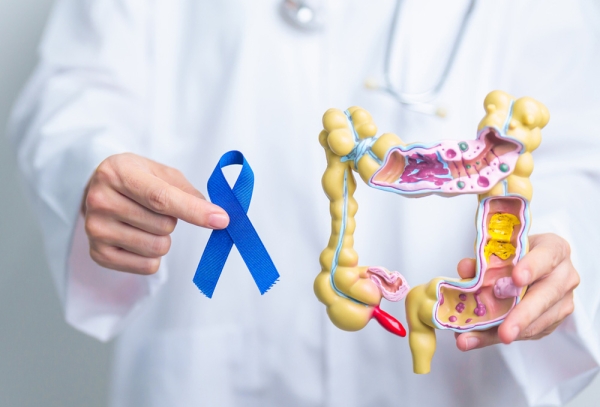
March marks Colorectal Cancer Awareness Month, a vital time to prioritize your digestive health and understand life-saving screening options. Colorectal cancer is highly preventable, yet it remains a leading cause of cancer-related deaths because many people delay testing. Recent changes to national health standards have shifted the timeline for when you should take action. Here are the updated guidelines to help you navigate your path to wellness.
New Colonoscopy Age Guidelines: Why 45 is the New 50
For years, age 50 was the magic number for your first screening. However, due to a concerning rise in colorectal cancer cases among younger adults, the American Cancer Society (ACS) and the US Preventive Services Task Force (USPSTF) officially lowered the recommended starting age to 45 for individuals at average risk.1,2 If you are 45 or older, now is the time to schedule your baseline exam. Starting early allows us to detect and remove precancerous polyps before they ever have a chance to turn into cancer.
High-Risk Factors: Who Needs Early Colorectal Cancer Screening?
While 45 is the standard for those at “average risk,” certain factors may require you to begin much sooner. You are considered at increased risk if you have:
- A personal or family history of colorectal cancer or polyps.
- A history of Inflammatory Bowel Disease (IBD), such as Ulcerative Colitis or Crohn’s Disease.
- Genetic syndromes like Lynch syndrome or FAP.
If any of these apply to you, we may recommend an early-onset screening schedule to ensure the highest level of protection.
Colonoscopy vs. At-Home Tests: Choosing the Gold Standard for Prevention
You may have heard of at-home stool tests, but it is important to understand the difference. While tests like FIT or Cologuard can detect signs of cancer, only a colonoscopy allows your physician to find and remove polyps during the same procedure. Therefore, a colonoscopy is actually a colon cancer prevention strategy!
At Texas Digestive Specialists, we recommend that a colonoscopy be the preferred test for colon cancer screening. However, if a patient is not a good candidate for a colonoscopy, then a stool test is an acceptable option.
If an at-home test returns a positive result, a follow-up “diagnostic” colonoscopy is required immediately to investigate the cause.
Take Control of Your Digestive Health This March
Colorectal cancer is unique because it is largely preventable through proactive care. This Awareness Month, don’t let myths about the prep or the procedure keep you from a test that takes less than an hour but can add decades to your life. Our offices in McAllen, Harlingen, and Brownsville are dedicated to providing a comfortable, professional environment for your screening.
Frequently Asked Questions
How long does the actual procedure take?
A standard screening colonoscopy usually takes between 30 to 60 minutes. However, you should plan to be at our facility for about two to three hours total to allow for pre-procedure check-in and the initial recovery period as the sedation wears off.
Do I really need a colonoscopy if I have no symptoms?
Absolutely. Colorectal cancer and precancerous polyps often develop without causing any pain or noticeable changes in bowel habits. The goal of a screening is to find and remove these polyps before they turn into cancer. Waiting for symptoms to appear often means the cancer has reached a more advanced stage.
Can I drive myself home after the appointment?
No. Because we use sedation to ensure your comfort during the procedure, you will be legally impaired for the remainder of the day. You must have a responsible adult driver accompany you to the office and drive you home safely. You can typically resume driving and normal activities the following morning.
What is the difference between a screening and a diagnostic colonoscopy?
A screening colonoscopy is a routine check for patients with no symptoms. A diagnostic colonoscopy is performed to investigate specific issues, such as rectal bleeding, or as a follow-up to a positive at-home stool test. At Texas Digestive Specialists, both procedures allow Dr. Perez to examine the colon and remove polyps immediately.
Reference Links:
- Colorectal Cancer: Screening – US Preventive Services TASK FORCE
- American Cancer Society Guideline for Colorectal Cancer Screening – American Cancer Society
AUTHOR: NOLAN E. PEREZ, MD, FACP, FACG
Dr. Nolan Perez is a board-certified gastroenterologist and the founder of Texas Digestive Specialists. With over 15 years of clinical excellence, Dr. Perez provides comprehensive digestive care to patients throughout the Rio Grande Valley, including McAllen, Harlingen, and Brownsville. He is recognized as a leading authority in gastroenterology, hepatology, and colorectal cancer prevention, dedicated to improving health outcomes through advanced diagnostics and patient-centered treatment plans.
Credentials & Recognition
Dr. Perez earned his Bachelor of Arts from the University of Texas at Austin and a Medical Doctorate from the University of Texas Health Science Center at San Antonio. After medical school, Dr. Perez served in the United States Navy as a Medical Corps Officer. He then completed residency training in Internal Medicine at the Regional Academic Health Center in Harlingen and fellowship training in Gastroenterology/Hepatology at Wayne State University/Detroit Medical Center. He is Board Certified in Gastroenterology and is a Fellow of the American College of Physicians and a Fellow of the American College of Gastroenterology. Dr. Perez is an active member of the American Gastroenterological Association (AGA), the American Society for Gastrointestinal Endoscopy (ASGE), the American Medical Association (AMA), the Texas Medical Association (TMA) and the Cameron/Willacy County Medical Society.
Dr. Perez currently serves as a member of the University of Texas System Board of Regents. He is also a Trustee for Harlingen CISD, member of the Philosophical Society of Texas and Governing Board for The Holdsworth Center. Dr. Perez is fluent in both English and Spanish. He is available for consultation in our McAllen, Harlingen and Brownsville offices.
Clinical Expertise
Dr. Perez specializes in the management of a wide range of gastrointestinal and liver disorders, from chronic acid reflux (GERD) and inflammatory bowel disease (IBD) to fatty liver disease and hepatitis. He is an expert in performing essential diagnostic procedures, including screening colonoscopies, upper endoscopies (EGD). He also specializes in liver and biliary disease while also performing advanced procedures such as EUS and ERCP. By integrating the latest medical innovations with a compassionate, evidence-based approach, Dr. Perez helps his patients achieve long-term digestive wellness. His practice is built on the philosophy that proactive screening and lifestyle management are the most effective tools for preventing chronic disease and enhancing quality of life.
Medical Disclaimer: This information is for educational purposes only and does not constitute medical advice. For diagnosis and treatment recommendations, please consult with Dr. Perez or another qualified specialist at Texas Digestive Specialists.
Content authored by Dr. Nolan E. Perez and verified against official sources.