
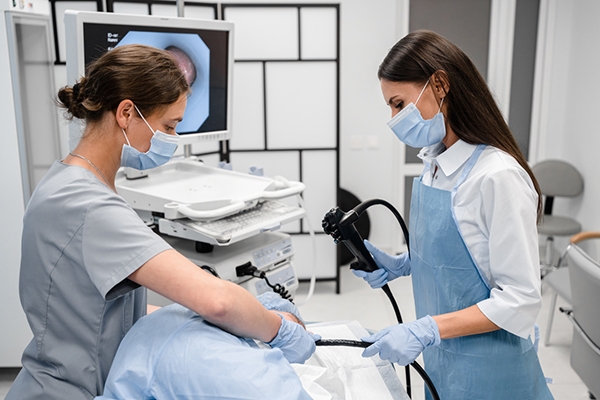
Persistent heartburn, difficulty swallowing, unexplained stomach pain, or chronic nausea can disrupt daily life and leave you searching for answers. While symptoms often provide clues, seeing what is happening inside the upper digestive tract can be essential for making an accurate diagnosis. An upper endoscopy, also known as an esophagogastroduodenoscopy (EGD), is one of the most effective tools gastroenterologists use to evaluate digestive health. This article explains what an upper endoscopy is, how it works, and what it can detect.
What Is an Upper Endoscopy (EGD)?
An upper endoscopy (EGD) is a minimally invasive diagnostic procedure that allows a gastroenterologist to examine the lining of the esophagus, stomach, and upper portion of the small intestine (duodenum).
During the procedure, a thin, flexible tube called an endoscope is gently guided through the mouth and into the upper digestive tract. The endoscope contains a small camera and light that transmit detailed images to a monitor, allowing the physician to identify abnormalities that may not be visible through imaging studies alone.
EGD is commonly performed in an outpatient setting and is often completed in less than 30 minutes.
Why Might You Need an EGD?
Your gastroenterologist may recommend an upper endoscopy if you are experiencing symptoms such as:
- Persistent acid reflux or GERD
- Difficulty swallowing (dysphagia)
- Chronic nausea or vomiting
- Upper abdominal pain
- Unexplained weight loss
- Gastrointestinal bleeding
- Ongoing indigestion
An EGD can help determine the cause of these symptoms and guide appropriate treatment.
What Conditions Can an Upper Endoscopy Detect?
One of the primary benefits of an upper endoscopy is its ability to diagnose a wide range of digestive disorders.
GERD and Barrett's Esophagus: Chronic acid reflux can damage the lining of the esophagus over time. An EGD can identify inflammation, ulcers, and Barrett's esophagus, a condition that may increase the risk of esophageal cancer.
Stomach Ulcers and Gastritis: An upper endoscopy can reveal ulcers, irritation, and inflammation within the stomach lining. It may also help identify damage caused by medications, infections, or excessive stomach acid.
Celiac Disease: If celiac disease is suspected, a gastroenterologist may obtain small tissue samples during the procedure to evaluate for intestinal damage caused by gluten sensitivity.
Esophageal Strictures: Scar tissue from chronic acid reflux can narrow the esophagus and make swallowing difficult. EGD allows physicians to identify these narrowed areas and, in some cases, treat them during the same procedure.
Polyps and Tumors: An upper endoscopy can detect abnormal growths, including polyps and certain cancers affecting the esophagus, stomach, or duodenum. Early detection often leads to more effective treatment options.
Hiatal Hernia: An upper endoscopy can detect a hiatal hernia by allowing the physician to directly visualise the area where the oesophagus meets the stomach and determine whether part of the stomach has moved above the diaphragm. Thus an EGD serves as a guide to the most appropriate treatment plan, including medication, lifestyle changes, or surgical repair when indicated.
Can an EGD Be Used for Treatment?
Yes. In addition to diagnosis, upper endoscopy can be used to perform certain treatments during the same procedure.
Depending on the findings, your physician may:
- Remove small polyps
- Stop gastrointestinal bleeding
- Dilate narrowed areas of the upper GI tract or esophagus
- Obtain biopsy samples for laboratory analysis
This ability to diagnose and treat issues simultaneously makes EGD a valuable tool in modern gastroenterology.
What to Expect During Recovery
Patients typically receive sedation to ensure comfort during the procedure. Afterward, you may experience mild throat soreness or bloating, but these symptoms generally resolve quickly.
Most patients can return home the same day, although someone else will need to drive due to the effects of sedation.
Comprehensive Digestive Care at Texas Digestive Specialists
At Texas Digestive Specialists, upper endoscopy is one of several advanced gastroenterology procedures used to evaluate digestive symptoms and identify underlying conditions. Along with colonoscopy, capsule endoscopy, colorectal screenings, and other diagnostic services, EGD helps provide the information needed to create personalized treatment plans and support long-term digestive health.
FAQs About Upper Endoscopy (EGD)
- Is an upper endoscopy painful?
Most patients receive sedation and remain comfortable throughout the procedure.
- How long does an EGD take?
The procedure itself typically takes 15 to 30 minutes, although recovery time adds additional time at the facility.
- Do I need to fast before an upper endoscopy?
Yes. Patients are usually instructed not to eat or drink for several hours before the procedure.
- Can an EGD detect stomach cancer?
An upper endoscopy can identify suspicious growths and allow biopsies to help diagnose stomach cancer.
- What is the difference between an EGD and a colonoscopy?
An EGD examines the upper digestive tract, while a colonoscopy evaluates the colon and rectum.
Reference Links:
AUTHOR: NOLAN E. PEREZ, MD, FACP, FACG
Dr. Nolan Perez is a board-certified gastroenterologist and the founder of Texas Digestive Specialists. With over 15 years of clinical excellence, Dr. Perez provides comprehensive digestive care to patients throughout the Rio Grande Valley, including McAllen, Harlingen, and Brownsville. He is recognized as a leading authority in gastroenterology, hepatology, and colorectal cancer prevention, dedicated to improving health outcomes through advanced diagnostics and patient-centered treatment plans.
Credentials & Recognition
Dr. Perez earned his Bachelor of Arts from the University of Texas at Austin and a Medical Doctorate from the University of Texas Health Science Center at San Antonio. After medical school, Dr. Perez served in the United States Navy as a Medical Corps Officer. He then completed residency training in Internal Medicine at the Regional Academic Health Center in Harlingen and fellowship training in Gastroenterology/Hepatology at Wayne State University/Detroit Medical Center. He is Board Certified in Gastroenterology and is a Fellow of the American College of Physicians and a Fellow of the American College of Gastroenterology. Dr. Perez is an active member of the American Gastroenterological Association (AGA), the American Society for Gastrointestinal Endoscopy (ASGE), the American Medical Association (AMA), the Texas Medical Association (TMA) and the Cameron/Willacy County Medical Society.
Dr. Perez currently serves as a member of the University of Texas System Board of Regents. He is also a Trustee for Harlingen CISD, member of the Philosophical Society of Texas and Governing Board for The Holdsworth Center. Dr. Perez is fluent in both English and Spanish. He is available for consultation in our McAllen, Harlingen and Brownsville offices.
Clinical Expertise
Dr. Perez specializes in the management of a wide range of gastrointestinal and liver disorders, from chronic acid reflux (GERD) and inflammatory bowel disease (IBD) to fatty liver disease and hepatitis. He is an expert in performing essential diagnostic procedures, including screening colonoscopies and upper endoscopies (EGD). He also specializes in liver and biliary disease while also performing advanced procedures such as EUS and ERCP. By integrating the latest medical innovations with a compassionate, evidence-based approach, Dr. Perez helps his patients achieve long-term digestive wellness. His practice is built on the philosophy that proactive screening and lifestyle management are the most effective tools for preventing chronic disease and enhancing quality of life.
Medical Disclaimer: This information is for educational purposes only and does not constitute medical advice. For diagnosis and treatment recommendations, please consult with Dr. Perez or another qualified specialist at Texas Digestive Specialists.
Content authored by Dr. Nolan E. Perez and verified against official sources.
AUTHOR: MAURO SILVA, MD, MPH
Dr. Mauro Silva is a gastroenterologist dedicated to providing comprehensive digestive and liver care to patients in the Rio Grande Valley, including Harlingen and surrounding communities. As a physician at Texas Digestive Specialists, Dr. Silva is committed to advancing patient health through preventive care, early detection, and evidence-based treatment of gastrointestinal and hepatologic conditions.
Credentials & Recognition
Dr. Silva earned his Bachelor of Science in Biochemistry, graduating cum laude from The University of Texas at Austin. He went on to obtain his Doctor of Medicine from McGovern Medical School at UT Health Houston, as well as a Master of Public Health from the University of Texas Health Science Center at Houston, reflecting his strong foundation in both clinical medicine and population health.
He completed his Internal Medicine residency at the University of Texas Southwestern Medical Center in Dallas, followed by fellowship training in Gastroenterology and Hepatology at the University of Texas Medical Branch in Galveston. During his training, Dr. Silva received several academic honors and scholarships, recognizing his dedication to medical excellence and community-focused care.
Clinical Expertise
Dr. Silva specializes in the diagnosis and management of a wide range of gastrointestinal and liver conditions, including gastroesophageal reflux disease (GERD), inflammatory bowel disease (IBD), and chronic liver diseases. He is trained in performing essential diagnostic procedures such as colonoscopy and upper endoscopy (EGD), with a focus on early detection and prevention of colorectal cancer and other digestive disorders.
With additional training in public health, Dr. Silva brings a unique perspective to patient care, emphasizing disease prevention, patient education, and long-term wellness. His approach combines clinical precision with compassionate care, helping patients navigate their health with confidence and clarity.
Medical Disclaimer: This information is for educational purposes only and does not constitute medical advice. For diagnosis and treatment recommendations, please consult with Dr. Silva or another qualified specialist at Texas Digestive Specialists.
Content authored by Dr. Mauro Silva and verified against official credentials and professional records.